
 Good running form helps you feel smoother, faster, and more confident. When you start with simple drills, you build better habits without overthinking things. These drills also help you avoid injuries because your body learns to move in a more efficient way. Even if you are brand new to running, you will see quick progress.
Below, you will find easy drills that beginners can add to any warm-up. Each drill takes less than a minute. Yet, they create real improvements when you repeat them often.
High Knees
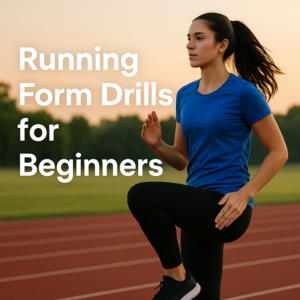
High knees wake up your core and improve leg drive. They also help you land under your body, which is key for good form. Start slowly, then pick up the pace as you feel more comfortable. Keep your chest tall. Lift your knees to hip height if you can. Because the movement is rhythmic, it prepares your body well for steady running.
Butt Kicks
Butt kicks help you learn a quicker leg turnover. They reduce overstriding because they teach your legs to cycle smoothly. Keep your shoulders relaxed and your steps light. You should hear very little noise when your feet hit the ground. As you warm up, your stride will feel more natural and less forced.
A-Skips
A-skips build coordination and balance. They also help beginners practise lifting the knee while keeping the foot under control. Start slow. Drive the knee up. Then sweep the foot down under your body. Because this drill is bouncy, it trains you to spend less time on the ground. This small change can make your running feel more efficient.
B-Skips
B-skips are a step up from A-skips. They add a leg extension that teaches you how to reach forward without overstriding. Extend the leg, then pull it back under your hips. This teaches you a smoother, more powerful stride. However, start gently. The movement can feel strange at first. After a few sessions, it becomes easier.
Straight-Leg Bounds
Straight-leg bounds improve posture and help you activate your glutes. Keep your legs straight but not locked. Reach forward with your foot and snap it down under your body. This drill encourages you to lean slightly forward from the ankles. This small adjustment often leads to better running form right away. Because the drill is simple, beginners usually learn it quickly.
Strides
Strides are short, smooth accelerations that help you practise good form at a faster speed. Start slow. Build up to about 80% of your top pace. Then ease back down. Keep your steps quick and light. As a result, you will learn how to run with control instead of tension. Many beginners notice big improvements after only a few sessions.
How to Add These Drills to Your Week
You do not need to do every drill each day. Instead, choose three or four and rotate them through the week. Do each drill for 20–30 seconds. Because they are short, you can add them to any warm-up without feeling rushed. Aim to use them two or three times per week. With consistent practice, you will see better posture, smoother strides, and more confidence on every run.